What beliefs do people with social anxiety have?
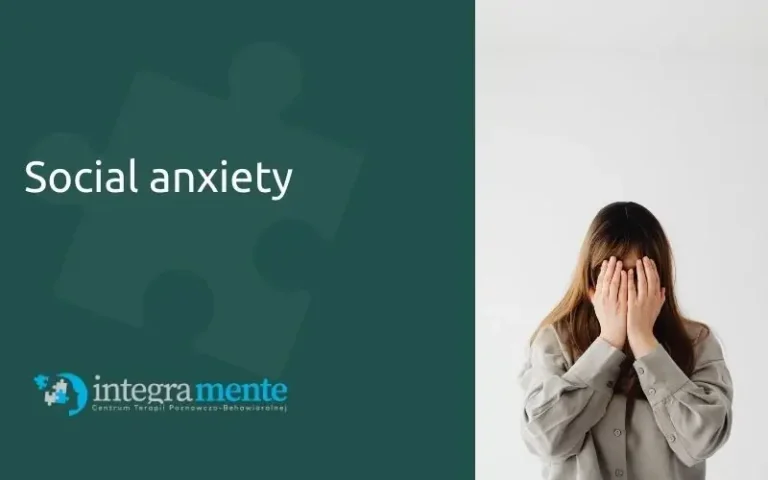
All of us have experienced some discomfort in social situations, related, for example, to the fear that we have said something inappropriate or unwise. This is perfectly natural. However, for some people, such thoughts are frequent and hinder healthy functioning. They result in experiencing strong anxiety in dealing with people and often lead to avoiding: socialising, meeting new people, doing things that require contact with people, giving presentations, job interviews or going on dates. This can significantly prevent people from achieving important life goals.
What are the characteristics of the thinking of people who have severe social anxiety?
• thoughts about my behaviour among people being inept.
• negative beliefs about my own social skills (“I can’t tell any interesting stories”, “I can’t make people laugh”).
• the belief that if others see my fear and shame, they will see me as weak/foolish/” crazy”.
• the belief that interpersonal relationships are competitive – someone has to ‘dominate’ and it won’t be me.
People with social anxiety are much more critical of their social behaviour than objective observers. They overestimate the visibility of anxiety symptoms (‘surely they can see I’m sweating; my voice is shaking’). In interactions, they are vigilant, try to over-control their behaviour and tend to avoid many situations (if they can). Often, after a situation, they already deeply analyse the mistakes they believe they made when talking to someone. Unfortunately, by avoiding social situations, we are not able to revise our negative beliefs or learn to talk freely with others.
Fortunately, by changing our beliefs and through regular exposure, we can manage social anxiety. If it is very high, it is advisable to seek the help of a psychotherapist. Cognitive behavioural psychotherapy is an effective approach for treating anxiety disorders, including social anxiety.
Integra Mente Centrum Terapii Poznawczo-Behawioralnej. English-speaking psychologists and cognitive-behavioral therapists based in Cracow, Poland. We also offer online psychotherapy and counseling.
English-speaking psychologists and cognitive-behavioral therapists based in Cracow, Poland. We also offer online psychotherapy and counseling.
Consulta psicológica y terapia en español en Cracovia u online.
To make an appointment, please contact us at:
+ 48 882 511 914 (calls/SMS/WhatsApp)
or via contact form (Contact) on integramente.pl
#CBT #DBT #terapiakrakow #terapia #psychoterapia #krakow #psychologia #emocje #emotions #therapy #psychology #psicologia #psicoterapia #emociones #cracovia #cracow #onlinetherapy #terapiaonline #therapyinenglish #terapiaenespanol #terapiaencracovia #therapyinkrakow #psycholog #mentalhealth #saludmental #integramente #español #expats #krakowexpats #expatsinpoland #terapiapoznawczobehawioralna